
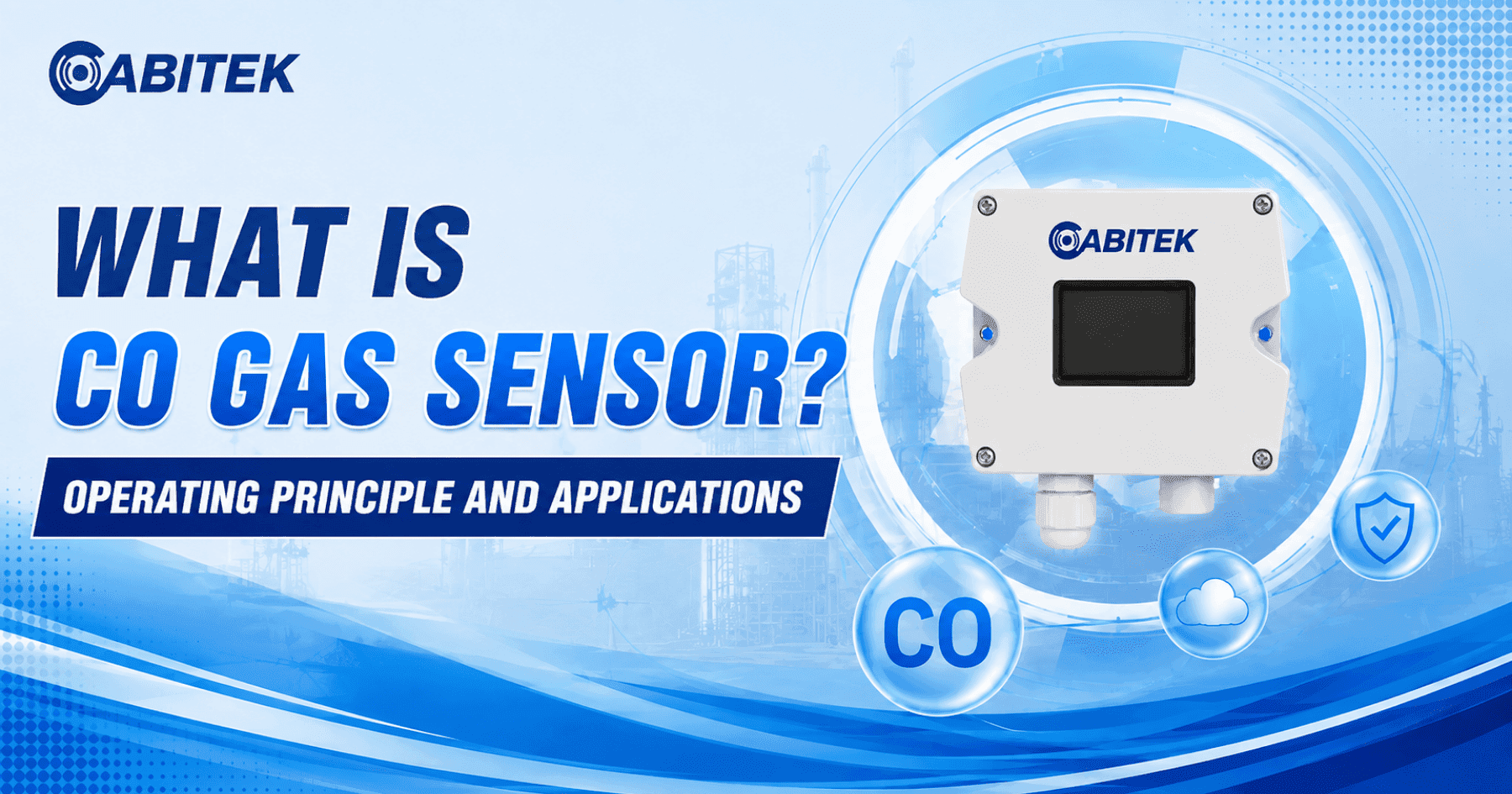

A CO gas sensor (Carbon Monoxide Sensor) is a device used to detect and monitor the concentration of carbon monoxide (CO) gas in the air. CO is a colorless, odorless gas that is difficult to detect using normal senses, but can pose serious dangers when accumulating at high concentrations. Therefore, CO gas sensors play a vital role in the early detection of gas leakage risks, issuing warnings, and protecting human safety as well as system integrity.
So, what is a CO gas sensor, how does it work, and where is it applied? Let us explore it in detail with Cabitek in the article below.
Introduction: What is CO Gas?

Carbon monoxide (CO) is a toxic, colorless, and odorless gas formed primarily when fuels undergo incomplete combustion due to an insufficient oxygen supply. CO can originate from various devices and activities in daily life and industrial production, such as:
- Incinerators and boilers
- Gas stoves and ovens
- Heaters and wood stoves
- Generators and internal combustion engines
- Exhaust gas from motor vehicles
- Stoves or grills using charcoal
Effects of CO on Health
The severity of CO’s health effects depends on the gas concentration and exposure duration. Higher concentrations lead to more severe health risks.
| CO Concentration (ppm) | Possible Health Effects |
|---|---|
| 0–9 | Low CO level, commonly found in indoor ambient air. |
| 10–50 | Can cause headaches and fatigue if exposed for extended periods. |
| 100–200 | May lead to dizziness, nausea, and other uncomfortable symptoms after exposure. |
| 400+ | Severe poisoning risk, potentially life-threatening upon prolonged exposure. |
| 800+ | Extremely dangerous concentration, leading to loss of consciousness and rapid fatality if not handled immediately. |
Note: Actual effect levels also depend on exposure duration, individual health condition, and environmental conditions.
Why is CO Gas Monitoring Important?

Monitoring CO gas concentration plays a crucial role in protecting personnel, assets, and ensuring operational safety. Key reasons include:
- Protecting worker health: Early detection of CO concentration in factories, parking basements, boiler rooms, engine rooms, and high-risk areas.
- Preventing accidents: Timely alerts when CO exceeds thresholds help reduce poisoning risks and minimize combustion-related accidents.
- Ensuring safety compliance: Gas monitoring systems help businesses control their working environment and meet labor safety standards.
- Enhancing automation: CO sensors can integrate with PLC, BMS, or alarm systems to automatically trigger ventilation fans, send alerts, or initiate corrective actions.
- Continuous monitoring: Real-time tracking of CO levels supports anomaly detection and enhances overall system safety.
What is a CO Gas Sensor?

A CO gas sensor (Carbon Monoxide Sensor) is a device used to detect and monitor the concentration of carbon monoxide (CO) gas in the air. CO is a colorless, odorless gas that is hard to detect naturally, but poses severe hazards when accumulated.
CO gas sensors can be found in:
- Smoke and gas detectors
- Smart thermostats
- HVAC systems
- Industrial safety equipment
- Vehicles and parking structures
Operating Principles of CO Gas Sensors

CO gas sensors operate based on different technologies. Each technology offers distinct characteristics regarding accuracy, response time, and application scope:
| Detection Principle | Description |
|---|---|
| Electrochemical | Relies on the redox reaction of CO at the electrode to generate an electric current, thereby determining the gas concentration. |
| Semiconductor (MOS) | The semiconductor material changes its electrical resistance upon contact with CO gas. This change is measured to determine concentration. |
| Infrared (NDIR) | Determines CO concentration based on the absorption rate of infrared radiation by gas molecules at specific wavelengths. |
| Colorimetric | Uses specialized materials or chemicals that change color when exposed to CO, indicating the presence of the gas. |
Among these, electrochemical sensors are the most widely used due to their high accuracy, excellent selectivity, fast response time, and low power consumption, making them ideal for industrial CO monitoring systems.
Main Components of a CO Gas Sensor
A CO gas sensor typically consists of several key components responsible for detecting, processing, and transmitting gas concentration signals:
- Sensing Element: Detects ambient CO gas and converts gas concentration into an electrical signal.
- Microcontroller (MCU): Receives, processes, and analyzes signals from the sensing element to determine CO concentration.
- Analog/Digital Output: Transmits measured data to PLC, BMS, controllers, or monitoring systems.
- Alarm Output / Relay: Triggers alarms or external equipment when CO levels exceed set thresholds.
- Display Screen: Some models feature integrated screens to display real-time CO concentrations.
- Wireless Connectivity: Modern sensors support Wi-Fi, Zigbee, or other wireless protocols, facilitating IoT integration and remote monitoring.
Key Technical Specifications of CO Gas Sensors
Specifications vary depending on technology and model. Common parameters include:
| Parameter | Typical Range |
|---|---|
| Measurement Range | 0–1,000 ppm or 0–2,000 ppm |
| Accuracy | Approximately ±3–5% of reading |
| Response Time (T90) | < 60 seconds |
| Operating Temperature | Approx. –10°C to +50°C (model dependent) |
| Power Supply Voltage | 3.3–24 VDC (type dependent) |
| Output Signal | Analog (mV), I²C, UART, Modbus, or 4–20 mA |
| Sensor Lifespan | Approx. 2–5 years for electrochemical sensors |
Note: The parameters above are for reference only. When selecting a CO sensor, always check the specific technical datasheet provided by the manufacturer.
Practical Applications of CO Gas Sensors

CO gas sensors are widely deployed to monitor carbon monoxide concentrations and provide early warnings for gas leaks or accumulation. Common applications include:
- Factories and Manufacturing Facilities: Monitoring CO in areas with burners, engines, generators, or heating systems.
- Basements and Parking Garages: Detecting CO from vehicle exhaust, integrated with automated ventilation fans.
- Boiler Rooms and Fuel Burning Areas: Tracking CO concentration to detect incomplete combustion or operational anomalies.
- HVAC and BMS Systems: Feeding CO data into control systems to automatically adjust ventilation as gas levels rise.
- Warehouses and Enclosed Spaces: Continuously monitoring to prevent workers from exposure to dangerous CO concentrations.
- Safety Alarm Systems: Connecting to sirens, strobe lights, PLCs, or monitoring networks to trigger timely alerts.
Where to Buy Genuine and Reliable CO Gas Sensors?

Cabitek is a leading reputable provider of sensors and automation measurement solutions in Vietnam. When purchasing CO gas sensor products (such as CM101) at CABITEK, customers can be assured of quality and dedicated support:
- 100% genuine products, complete with CO/CQ documentation.
- Experienced team of engineers providing precise configuration advice.
- Competitive pricing with long-term warranty policies.
- Dedicated technical support throughout installation and operation.
Conclusion
A CO gas sensor is a vital device for detecting and monitoring carbon monoxide (CO) concentrations in the air, contributing to protecting human health and ensuring industrial safety. By converting CO levels into electrical signals for transmission to alarm systems, PLCs, BMS, or monitoring networks, CO sensors are extensively applied in factories, parking basements, engine rooms, HVAC systems, and other high-risk environments.
When choosing a CO gas sensor, it is essential to evaluate factors such as measurement range, accuracy, response time, connection interfaces, and environmental operating conditions to ensure stable performance and meet actual operational requirements.